

Reviewed by Dr. Matthew Young, DDS
Reading time: four minutes
A tooth infection can cause more than just tooth pain. In some cases, the inflammation and pressure associated with a dental infection may contribute to headaches, facial discomfort, or pain that seems to radiate beyond the affected tooth.
Can a Tooth Infection Cause Headaches?
A tooth infection can cause headaches in some individuals. While tooth pain is the most common symptom, the discomfort associated with a dental infection may sometimes extend beyond the affected tooth and be felt elsewhere in the face or head.
Headaches may occur alongside other symptoms such as tooth pain, swelling, sensitivity, or pain when chewing.
How Can a Tooth Infection Cause Pain Beyond the Tooth?
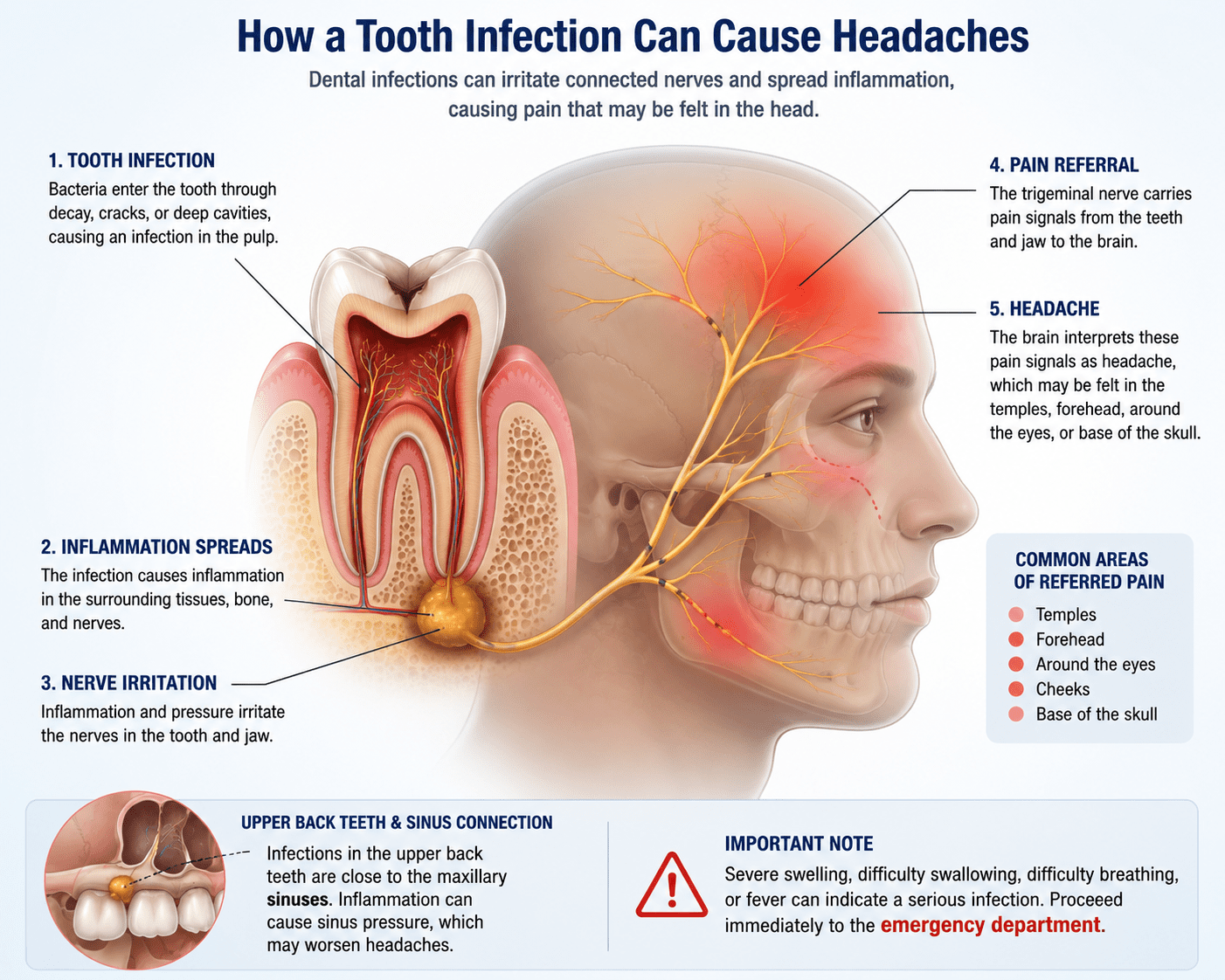
The nerves in the teeth and jaw are connected to nerve pathways throughout the face and head. When these nerves become irritated by infection, inflammation, or pressure, pain may be felt in areas beyond the affected tooth, including the temples, forehead, cheeks, or jaw.
Infections involving the upper back teeth may also create pressure in the nearby sinuses because of their close proximity to the maxillary sinuses. This can contribute to facial pain, pressure, or headaches that may feel similar to sinus-related discomfort.
How to Tell if Your Headache Is Tooth-Related
Headaches caused by a tooth infection are often accompanied by other dental symptoms that can help identify the underlying source of the pain.
Signs that a tooth infection may be causing your headache include:
- Jaw or tooth pain on one side
- Pain or tooth sensitivity increases when biting down or applying pressure to a specific tooth
- The discomfort worsens with hot or cold food and drinks
- The headache developed around the same time as other dental symptoms
- Over-the-counter pain relievers provide only partial or temporary relief
When Should a Tooth Infection Be Evaluated?
A tooth infection should be evaluated as soon as possible. Dental infections do not typically resolve on their own and may continue to spread within the tooth, gums, or surrounding tissues if left untreated.
Signs that warrant prompt dental evaluation include persistent tooth pain, swelling, sensitivity to pressure, a bad taste in the mouth, or drainage near the affected tooth.
Severe swelling, difficulty swallowing, difficulty breathing, or fever may indicate that the infection is spreading. If these symptoms develop, seek immediate medical attention at the nearest emergency department.
Tooth Infection Treatment at Post Street Dental Group
Tooth infections should be evaluated promptly, particularly when symptoms include significant pain, swelling, or headaches that may be related to a dental problem. A dental examination can help determine whether an infection is contributing to your symptoms and what treatment may be needed.
At Post Street Dental Group in downtown San Francisco, we provide emergency dental care for patients experiencing tooth infections, abscesses, and other urgent dental concerns. Same-day appointments are often available to help patients receive timely evaluation and treatment.
Emergency Dentist in San Francisco
To book an appointment at our dental office in San Francisco, call (415) 986-4534 or visit us at 490 Post St #520, San Francisco, CA 94102.
FAQs
Yes. A dental abscess may create pressure and inflammation that can contribute to headaches, facial pain, or discomfort in nearby areas of the head and jaw. The severity of symptoms often depends on the location and extent of the infection.
The headache pain may temporarily improve, but symptoms often return if the underlying infection remains untreated. Because tooth infections generally do not resolve on their own, professional evaluation is usually recommended.
Yes. Infections involving upper teeth can sometimes create pressure and discomfort that resembles sinus-related pain. This may cause aching in the cheeks, around the eyes, or in the upper jaw.